12 May 2020

Hypnosis = Mind Control?


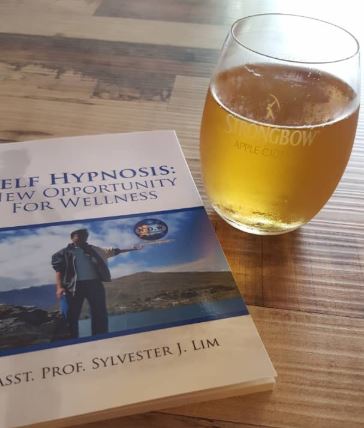
So you figured hypnosis is sleep, being gullible, being weak-minded and being controlled by someone else? Well, do reconsider.

What exactly is hypnosis (if not the above)? Hypnosis is actually a state of increased awareness, focus, concentration, and suggestibility. It’s usually a state of relaxation that makes you more open to suggestions and allows you to focus on these suggestions. It’s also important to note that relaxation is not always a necessary component for one to be in a hypnotic state. Also, suggestions given are suggestions you “allow” yourself to accept. That means suggestions from others aren’t automatically accepted unless you want to (or are acceptable to you). At least this is the case in hypnotherapy.


Some also think that hypnosis is synonymous to being asleep. This is far from being the truth. While an individual in the state of hypnosis may appear to be asleep, he/she remains conscious. The individual hears what is being said (suggested) although he/she may not remember everything that had been said.

Here’s a thought for you. Believe it or not, we all experience hypnosis every day. For example, have you ever watched a movie that got you so engrossed that you never noticed someone walk out of the room or walk in? Or have you had tears roll down your face while watching a sad movie? Oh feel your heart pounding during a tense/suspenseful moment in the movie? How about shouting at or somehow cursing the actor/actress in the show? Well, these are all examples of hypnosis at work. We may become so intensely focused on the movie that our body reacts to the images and feels as if we are experiencing what the actors/actresses are experiencing – even though it is just a movie and the characters are merely acting.

Hypnosis is not sleep. It is not being gullible, weak-minded or being controlled by another person. It is merely a state of mind – a different state of consciousness and awareness

In a hypnosis session, you – the subject – are in control. How is that, you ask? Well the fact is that when a suggestion given to you is contrary to your principles and values, you will simply “snap out of it” (‘it” being the hypnotic state). For example, if you were told to get-up and go stand on your head in the corner of the room, you will probably not be willing to do that. Because the suggestion is “unacceptable,” you will almost certainly reject the suggestion by either coming out of the state of hypnosis or simply by ignoring the suggestion.

Stage hypnosis vs hypnotherapy

There is a huge difference between stage hypnosis and hypnotherapy.  The former is for the purpose of entertainment while the latter is where hypnosis is used to help another with issues/challenges.
A stage hypnotist is a person who uses hypnosis to entertain people – whether it is in a show or on stage. You may have seen (on tv or life) or even participated in these events before where you see participants bark like dogs or quack like a duck etcetera.

On the other hand, a hypnotherapist is one who has been trained to use hypnosis to help others deal with challenges in their lives. Hypnosis can be a very valuable tool in helping deal with issues such as sleep disturbances, improving concentration and memory, overcoming fears and phobias, strengthening one’s self confidence and many other issues. Many have also employed this to help them manage their weight and to give up smoking and other addictive habits.


This is just a simple description of what hypnosis really is. Do keep in mind the hypnotherapist does not have control over you. He or she only brings you to a state of heightened relaxation where you are open to suggestions – suggestions that are acceptable to the subject/participant/client.
Next round, we will look at the difference between hypnotherapy and clinical hypnotherapy.

Peace & Namaste

07 May 2020

Gratitude


In the midst of a global pandemic, it's so easy for us to get lost in a world of negatives. All around us, we can see people who are suffering. Loss of job, income/security, missing friends, and all these not even including the many lives taken over this period and because of the virus.

We hear stories of people suffering from hunger. This is especially painful, for me, when it comes to stories of children or elderly without food. Yes, there is no doubt - indeed a lot of sadness.

As mentioned previously in the 5 tips given over the last week, I've suggested that we remain focused on positive things in our lives. Again, this is not to suggest we close our ears/eyes/heart to the suffering that is evident around us. That would be like the proverbial ostrich burying it's head in the sand, That's not the idea I was advocating.

Instead - if there is something we can do to help, by all means help. If there is nothing else we can do - then perhaps, if you believe, then pray. Offer prayers for those who are suffering (and this includes us). If we've done all that is in our power to do, then focusing (staying) in a state of misery or regret or sorrow is not going to do anyone any good.

Someone indicated to me recently, that when she was in the midst of giving thanks for all that she is blessed with - she felt guilty for being thankful when so many out there are suffering. It's as if because others are suffering, then I must suffer along with them. While this is not an uncommon experience for many people, we ought to stop and ask ourselves how feeling bad for others to the point we deny (refuse to acknowledge) the blessings in our life going to be of any benefit to anyone?
Being thankful for what you are blessed with does not mean wishing others unwell.

My recommendation to all of us is to be ever mindful of the many blessings in our lives. And no matter what the situation, there is always - always something to be thankful for.  We ought to remain in a state of gratitude. The more we focus on what is positive in our lives, the more we train our minds to see the abundance around us.  This does not make you into a person who is heartless or uncaring about the suffering of others. In fact, I believe if you can be in a state of well-being - if you can remain healthy and positive - the more likely it is that you will be able to bring blessings to others as well.

Do what you can to help others. Do what you can to help yourself too. At the end of the day - leave all else in the hands of the Almighty, God, the Universe, the Source - whatever name you attribute to this higher power. And give thanks. Be in a state of gratitude. Be mindful of all that are blessings in your life - the fact that you have food on your table, a home to take shelter, friends and family who care about you - whether they are physically there with you or not. Give thanks for all that is.


Right NOW - ask yourself, what can you be grateful for? What ARE you grateful for?
Stay happy - Stay safe.

Peace & Namaste

06 May 2020

Self Care & The other "Serenity Prayer"


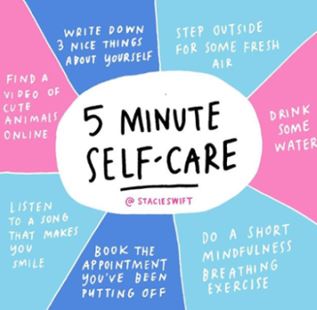
Take care of your self. Many make the mistake of thinking that self care simply makes one selfish. This is, again, a result of our social conditioning where we have been taught to always "sacrifice" for another, always give to others before you take for yourself. As with most things - extremes are probably not what's best.  So, if you are always putting others ahead of yourself - it also means there is a lack of care and respect for your own Self.  

I like to take the example of being on a plane (taking a flight) when I talk about self care. If you have ever taken a flight anywhere, you will likely remember the cabin crew going over certain safety protocols with the passengers before take off.  In one part when they talk about "in the instance of an emergency .. the oxygen masks will automatically drop down ..."  In that instance, if you recall, the instruction given to all of us is to mask ourselves before making an attempt to assist the person next to you even if that person is a child or an elderly.  The logic is simple. If you attempt to assist the other person but in the process lose consciousness yourself, you will be of no help to the other person. Hence, one needs to take the oxygen masks, place that over him/herself first to ensure he/she would not pass out as the plane drops its altitude.  Only after one has done that, should he/she then attempt to help others.

In the same light, in our day to day living - consider that. If we are unwell outselves - extremely stressed out and feeling agitated or irritable - how likely would it be that we can be of kind, compassionate, and helpful to another? 

So, remember to be kind to yourself. While it may be  important for us to take care of our children or aged parents (or whoever), it is equally important to take care of ourselves. You can’t do well taking care of another if you are yourself not well taken care of. Make self-care a priority. Take time to recharge your "batteries." 

Also, remind yourself that at any given moment, you are doing your best. If you make a mistake, as we all do from time to time, own up to it, apologize, forgive yourself, and most importantly – what lesson can you take from that so called mistake to improve on yourself.

This is part 5 of the 5 tips I wanted to share.  Things we can do to keep our sanity during the "lock down." As we (in Malaysia) are now moving into a Conditional Movement Control Order (CMCO), keep in mind all the 5 suggestions given are also applicable for all other times.

Remember also to look up hypnosis (or meditation). Neither is “religion.” They can be powerful tools to help us maintain a sense of peace and calm especially in these challenging times. Beyond this situation we are in – they can also serve to help us on a positive journey of growth, development, and well-being.

We are all in this together. We are all going to get through this – better, stronger, wiser, and more compassionate than before. And that in itself is a positive – a silver lining in an otherwise dark cloud.

Peace & Namaste
Sylvester

05 May 2020

The Serenity Prayer (Part 4 of 5)

We always have a choice, though we don’t always see that. 

It is important to recognize situations where some things ARE beyond our control. But even when they are seemingly out of our control, we still do have a CHOICE how we respond to that situation. 

In any given situation or event, even if it may seem to be unpleasant at the moment - ask yourself, what is the most beneficial response I can have at this moment? Getting angry when stuck in a jam, for example. Banging on the horn repeatedly and cussing isn't likely to move the traffic along any faster. It would likely serve to increase your blood pressure, hurt your hand from banging on the horn,  and maybe even damage the steering wheel.

Instead, if you consider what your most beneficial response may be at that given moment - perhaps you will come to accept that present NOW. Take the moment to reflect - something pleasant, something calm, something enriching. Use that time given to you to "take a break" from the busy hustle and bustle of everyday rush. Turn on your favorite radio channel, listen to your preferred DVD - perhaps a song, music, or even a motivational talk by your favorite guru. Wouldn't that be more beneficial?

If a "mistake" has already been done. Take the example of spilled milk. Crying over it and screaming and shouting - be it at others or at yourself - isn't going to return the milk to it's container. Instead, consider what could be done in the future to decrease the likelihood of that mistake. Is there a lesson that can be drawn in the incident. And knowing that with some things, they are just "accidents." Something unintended - but they happen to the best of us. So learning to accept them just as they are without judging yourself or another may also be the way to go. Perhaps they can be a reminder to you of how you have grown. To be a more accepting, a calmer, a more patient person: parent, child, friend, colleague etc.


As in the previous blog article (Part 3 of 5) - there is always always something we can be grateful for. Focus your energy on that positive. Get something beneficial and empowering from it. Stay positive. Stay healthy.

Peace & Namaste

04 May 2020

Focus on the NOW (present) (Part 3 of 5)


It has been said: we experience “depression” when we live in the past, and “anxiety” when we live in the future. We forget that all we have, really, is the present – the NOW.

When you are with your child/spouse (whoever), try to immerse yourself fully in the moment putting aside “I should have done this and that earlier / yesterday / etc.” or “I need to do this and that later on.” Many of us have been conditioned to constantly be thinking of the next moment or the past. 

We may be thinking about all the things we should have done or could have done and didn't do. Alternatively, we may be thinking of all the things we did but now wish we didn't. No amount of regret or guilt is going to be able to change our past. All that energy spent in looking at the past does no good in changing it. What has been, has been. The only good guilt and regret can do for us if we take them to spur us onwards. Learn the lesson they give. And then move on to correct "mistakes" made.

Similarly, we are also conditioned to look only at the future. Worrying that this or that may happen. What if this .. what if that? Filling our minds with all the what ifs and worrying about this and that will not do us any good. However, if we consider what we can do to make things better and then act on them - they may do us some good. Once a plan has been made and action taken, we need to let it proceed as it will without constantly ruminating on it. All the worries about tomorrow will similarly produce nothing.

All we really have is the present moment - the NOW. Do what we can to correct past mistakes and/or to prepare for the future. And then proceed with your decision without a continuous thinking and rethinking. If there is something you can do about it, do it.  If there is not, learn to accept and let it go.

Whenever you are doing something, let your focus be fully in the present moment. Set a goal, and learn to enjoy the journey (the process) - which is the present moment - and immerse yourself fully in the activity in hand.

Whenever you are with someone - be that your colleague, associate, friend, family member, your spouse or your child give him/her your full attention. If you are constantly distracted with what was in your past or what is to come, you will miss this very moment. And this moment, once gone, will never come again. Your full attention given to the one you are with is a precious precious gift to them and can go a long way in nurturing them (and yourself too).

Be in the NOW. Embrace it fully and be glad you have this time - this moment. Make full use of it for all we truly have is this moment NOW. 

03 May 2020

In every dark cloud, there's a silver lining (Part 2 of 5)


For everything situation or event in life, there’s always something we can be thankful for. ALWAYS. It’s just that most of us – our brains – have been trained to look for the worst in any situation. If not the worst, then for most people we tend to look for the negatives, the problems, the difficulties. This may be because of an underlying belief that life IS difficult. Life IS unfair. We MUST struggle in order to succeed. And many other similar beliefs that we have come to accept and therefor experience in our lives.

These underlying messages are embedded in our subconscious, and we play out that "reality" expected. As you believe it, so it is.  In psychology, this is often referred to as the "Self Fulfilling Prophecy."

My suggestion here is a little different from Part 1 previously. With the previous suggestion of minimizing the negative flow of information, the idea was to substitute the constant flow of taking in or exposing ourselves to an overwhelming amount of the negative. Instead, it would be more enriching if we were to allow more positive, more pleasant news to come to us. Some may say it was simply just substituting negative with positive news.

However, here I am suggesting we take it one step further. Not only do we look for positive news to replace the dark and gloomy. Instead, look for the silver lining – “the good out of the bad.” In other words, within any "unpleasant" situation or event - look out for the positive thing that can come out of it. Perhaps it is a lesson we can take from it. Or we may see an opportunity instead of a problem.

Re-train our brain to look for positive things in our lives to be grateful for. And if we were to look, we will always see that there is something to be grateful for.

Peace & Namaste

02 May 2020

Minimize the continuous flow of the news (negative) (Part 1 of 5)

When we were kids, almost all decisions were made for us. What to wear, what to eat, and what to watch - these were all decided by our parents or caretakers.  What information we took in back then was very much out of our control.

Today, however, we do have greater autonomy. While many are so deeply conditioned to be passive recipients of decisions (and information) made with regards to our well-being, we do actually have a choice. I can appreciate that many of us feel this is not true. But that's part of the conditioning. It has become our norm. And you have the power to change that "norm." Start believing you do have control in many instances. Reclaim your power to decide - especially when it comes to what information you take in on a daily basis.

Social media is a buzz daily with frightening news. Family members, friends, associates, and colleagues - though with good intention - readily provide you with daily updates of the terrible news all around the world. In this period of pandemic - this can be seen even more rampantly. 

While I am not suggesting we bury our heads in the sand and not keep up to date, I am suggesting we CAN – minimize the steady stream of “negative” news we get daily. How many infected, how many have passed away, etc. How can it be helpful to continuously fill our lives with scary and unpleasant information? All that does is reinforce the idea of gloom and doom in a very very dark world.

Instead of checking every morning (or daily) on what terrible things are happening - checking on the number of death thus far and so on, look out for pleasant, happy, positive news. Whether that pertains to the current pandemic or otherwise, start filling your world view with the beauty of life, the wonderful things that are still happening daily, the joy of simple everyday living. If you look for them, you will see them.


Seeing these, feeling them, experiencing the many blessings that abound in our lives - be prepared to share these with others as well. You can be the beacon of light in a time when most others seem to find themselves in darkness.

Minimize your daily intake of "negative" news and begin the process of seeing positive and happy news that surrounds you. Do it NOW and see how quickly that can pick you up from a sense of fear, anxiety, and depression.


Shalom