12 March 2021

Another "New" Beginning


My journey in this blog, I believe, started around 2005 (if I am not mistaken). Since then there's been numerous stop-and-go moments. I marvel at how some people are able to keep their writing going on a daily basis and for years.

On the one hand, it doesn't seem to be so difficult. Or it shouldn't. Wouldn't this be akin to just any other habitual behavior? We don't stop to think each day if we have to brush our teeth or the many other routine stuff that we do everyday. So why should making this into a habit seem so challenging? I am not sure what the answer to that question may be, but I can tell from my lived experience - it has been challenging.

I want to say perhaps I am not as disciplined as I want to be. But two thoughts will surface to hold me back from fully accepting that. 1) I am aware that it is unproductive (non-beneficial) to label ourselves in negative ways. 2) I am also keenly aware that I can be and have been "disciplined" in many other areas in my life. So why is it so hard for me to do this, and what keeps me from turning this writing into a "habit?" One that, I am deeply convinced will only bring benefit to me.

Perhaps, like many things in life - sometimes it is pointless to spin our wheels trying to answer the question "why." Over-analyzing has not helped. So perhaps it is best to just accept it as it is for whatever reason. But accepting it does not mean not seeking to change or to improve. Accept the reality that it has been challenging, and then continue to strive to do better.

As Lincoln says, "It's not how many times you fall, but how many times you get back up." I am getting back up NOW.


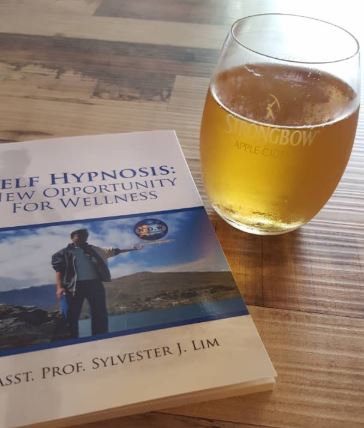
And so it is - Today is a NEW beginning. The latest of the NEWs.  After all, the only thing that counts really is the here and NOW.  So focusing on this moment, letting of the past - I will commit myself to a New Opportunity for Wellness right NOW. (12th March 2021)

Shalom.

25 September 2020

Inside or Outside - musing thought

 Just an observation and relating it to life in general.


This morning as I was washing my coffee mug, I noticed how oily it felt on the outside of the cup. As I dipped the sponge into the soap dish for more detergent,

my one voice said – “you should be more concerned with washing the inside of the cup.”

The other voice immediately replied – “but it is so oily on the outside!”

The first voice returned with a – “but the inside is more important as that’s where your coffee sits.”

Even as these two debated with each other, my hand with the sponge went towards washing the outside.


The Observer mind then mused: Isn’t this so like life? Most people are concerned with “cleaning” (beautifying) the outside rather than the inside which is clearly more important.

In our day to day living, we can get so preoccupied with how we look, what we wear, cologne, make-up, hair gel and what not because we want to look good. Or spend time, money, and effort working out to look good or to fit into a certain dress or pair of jeans – YET – pay little attention to the need of the mind, body, and soul. Less concerned about what we think, what we feel, and what we put into our system in the form of nourishment.

Isn’t it also interesting that a mundane thing like washing your coffee mug can also relate to life in general? There are lessons available to us in all things – if we choose to open our minds, observe, and learn.

Oh, by the way – YES, I do speak to myself. Very often too. LOL!!!


05 August 2020

Help or Not Help

A helping hand …

While it is true that all of us may need a helping hand sometime in our lives – and it is good to be able to help – but it is also important to keep in mind that sometimes one’s good intention to help may lead another to become dependent.

We should all be able to reach out and ask for assistance when in need.  There is no shame in that. Yet, it is good to remember to keep our focus on finding a long term solution to what challenges us.

Having good souls around willing to assist by giving us a hand – be that in the form of cash as a gift or anything else – is great, and certainly something to celebrate. We just need to be careful that we don’t get trapped in the belief that we are dependent and constantly have a need for others to save us.

While writing this, I am mindful that what I write may make it even more difficult for those in need to reach out for help. However, that is not my intention. I want to “correct” that potentiality by directing these thoughts of mine (my writing) to those who are in the position to give instead. But then, that too might be cause for some to refrain from giving. Again, not my intention either.

I don’t see how I can share this without somehow possibly upsetting some people or having this be misconstrued. So, instead of remaining silent (not writing) or worrying too much about who likes it or does not like it – or how my message/thought may be misconstrued, I am just going to write anyway and be true to what’s in my heart and head.

Especially during this tumultuous period where so many people have been suffering these past months, I have seen so many needing help but not willing to or able to reach out for assistance. And then there are those who do, and are – in one shape or other – punished for it. I can probable write a whole chapter, at least, about these variations in society. However, today’s topic is just on a select group who are “demanding” that they be helped. Yes, I did mean demanding. As if it is your obligation to save them and that it is their right that you must help them.

A couple of months ago, at the beginning of the MCO, I posted on social media that I would be happy to help in anyway I can if anyone needed assistance – no questions asked. I felt truly blessed that four people did reach out and sought help. I am not certain how much the little contributions I made to each of them helped them along the way. It is just so rewarding to see that most of them have moved on trying to rebuild their lives in the so called new normal.

A friend of mind who followed and re-posted my message was less fortunate (I suppose). She too had a handful of individuals who reached out to her for assistance. I say less fortunate because one in particular returned repeatedly to ask for help and got increasingly demanding. Since we had said “no questions asked,” offer of assistance (one time or more than that) did not come after an “investigation” in to each individual’s background. But because this particular individual was demanding, she thought it wise to perhaps look into this situation a little more in depth. She discussed this with me, and I helped look into the situation. Turns out this individual was already a recipient of a number of financial aids provided by the government/ngo. So sad. This makes giving more difficult for those who want to help.

But I digress – maybe just a little. Like I said at the beginning of this article – it’s not my intention to put down those who seek help nor is it my desire to encourage others not to give. People should be encouraged to seek help when they need, and those who can help should help. Always.

The purpose of my writing is just to highlight that we – whether as giver or receiver – should be mindful to not form a dependency. If you keep giving and giving and giving, the individual in need may never learn to stand on his/her own feet again. This may add to their predicament as each time they receive, they may feel more and more incompetent and start hating themselves. After awhile, they would have bought on the idea that they are incapable and always in need of others – feeling indebted to their savior, their sense of self-worth continues to spiral down. The adage in the picture below depicts this so well.

I suppose I don’t really blame those who seem to exhibit a sense of entitlement either. I think in many ways our society has advocated that for a very long time. It is not inconceivable for one to quickly develop this way of thinking when many well meaning individuals/organizations/government agencies also have that mentality. Good intention, no doubt, but it sends the wrong message to continuously give handouts without addressing the greater challenge.

So – my request (purpose of this writing) is for us to do what we can to help others whenever possible and still keep in mind to help the “helpee” (one you are trying to help) to retain his/her dignity and assist them in finding solutions rather than just doing the good deed of dolling out some cash as quick fix. Help them be independent again and not develop the habit of sitting back, receiving aids while waiting for things to get better.

Make plans, take action, do something – anything – to make tomorrow better. Just do it NOW.


15 May 2020

Hypnotherapy & Clinical Hypnotherapy: Is there a difference?

Hypnotherapy and Clinical Hypnotherapy


These two terms are often used interchangeably. But are they really synonymous? Or are there subtle and/or significant differences between the two. Like the word hypnosis, the differing definitions provided by practitioners and “academicians” (just about anyone who questions, studies, or purports to understand hypnosis) remain ambiguous – even contentious.
I have been looking for sources to define clinical hypnotherapy – some documentation that I can cite or quote that gives a concise and understandable definition for the term. To date, unfortunately, I have not succeeded.  So it is important to note that the following is merely my own opinion on the matter. I cannot and will not indeed insist that others have to adhere to my own opinion or belief. Ultimately, each of you will have to decide for yourself what makes sense and what resonates with your own values.

I remember when I was first trained to be a hypnotherapist almost 25 years ago, by the renown Dr. A.M. Krasner – author of the Wizard Within and founder of the American Institute of Hypnotherapy and the American Board of Hypnotherapy. I was issued a certificate officially certifying me as a “Clinical Hypnotherapist.” Of course I was elated to receive that piece of document that stated “Clinical Hypnotherapist” rather than “Hypnotherapist.”

Looking back, I am certain like with many people I found the title “clinical hypnotherapist” as somewhat being significantly “superior” to that of “hypnotherapist.” Even back then, however, I was quick to point out that it should not be stated as clinical as the training provided little knowledge, if any, on what I believed to be clinical in nature (equating clinical to something medical or psychological). In reality there was no training in psychotherapy or in medicine.

Society’s perception has been shaped to believe, erroneously I might add, that being a clinician is somehow deemed superior and therefore more coveted by the majority. One can recognize, even today, the deference given to medical practitioners over others or even clinical psychologists over say counselling psychologists.

In the subsequent year when I renewed my membership with the American Board of Hypnotherapy (ABH), the body that certified me, I noted that the new certificate showed “Certified Hypnotherapist” as opposed to “Clinical Hypnotherapist.” In some sense I was glad for the “correction” they made. I can’t say I was disappointed as I did not see myself as being any less qualified as a clinician since I was already a practicing counsellor and had done an additional year of post graduate studies in Clinical Psychology. I felt the change of term on their certificate indicated the Association’s cognizance of the fact that there is indeed a difference between a clinical hypnotherapist and a hypnotherapist. In fact, in their training there is caution in handling medical or psychological diagnoses. These are contraindicated in hypnotherapy, and a hypnotherapist is directed to refer and/or consult with a trained and licensed individual with regard to assisting with a client who has been so diagnosed.

Hence, this is where I came to rest with my definition of a clinical hypnotherapist. He/she should be one with additional training – be it in psychotherapy or medicine. Of course, over the years I have come to recognize that the term clinical can, and in fact does, include other areas of clinical work including though not limited to the studies in: dentistry, pharmacy, midwifery, birthing, chiropractic, and so forth. I’ve also become clearer that the word “clinical” or clinician does not denote superiority but rather additional or separate expertise in particular area. So, while I consider myself a clinical hypnotherapist I would not be so ready to jump in and assist a client on areas beyond my training or experience/expertise.  For example, I would not work with one who wishes to give birth via hypno-birthing (unless and/or until I have been trained to do so). Nor would I claim to be able and willing to work with a patient who wishes to be hypnotized for the purpose of surgery (to avoid the use of anaesthetic) – without at least collaboration with a licensed medical practitioner.

In regards to the term hypnotherapy and because I felt “successful” in pointing out for consideration the use of the word clinical hypnotherapy, when I was later trained and certified to be a trainer who can in turn certify others – I pointed out that even the use of the word hypnotherapist is inaccurate (since participants may not again have the benefit of training as a therapist). Bolden, I am sure, by my earlier experience – I was eager to point this out. However, Drs. Tad James (founder/creator of Timeline Therapy) and Adrianna James were quick to draw my attention to the definition we use for hypnotherapy.

Hypnosis:   a tool; a technique; a modality - used by a trained professional to aid a client/patient
Therapy:    
treatment of a disorder/issue/challenge
Hypnotherapy, then, is:    the use of hypnosis in the treatment of a disorder (with the term disorder used generically here not necessary a diagnosis from the ICD or DSM)


Hence, my conclusion is that clinical hypnotherapy refers to the use of hypnosis as a treatment modality/approach/tool/technique in a clinical setting by a professional trained in that respective clinical field for the purpose of helping his/her client/patient to deal with the client’s issue/disorder. On the other hand, a hypnotherapist is one who is trained to use hypnosis to help others with any and all issues that do not necessarily require additional specialized training that is clinical in nature. It is also important to note that a hypnotherapist – like counselors, psychotherapists, and even doctors – who may be additionally trained in certain areas of hypnotherapy. For example one may have additional and specialized training in dealing with past life (past life regression or PLR), weight loss management, sports therapy, smoking cessation, inner child therapy, therapeutic imagery, hypno-birthing and a myriad of others.

It is of particular concern to me to hear of my peers who are practitioners readily offer to help anyone with any issue be they medical or psychological without the necessary training in those areas. While I respect each individual’s right to do as he/she sees fit bearing in mind the one great guiding principle of “above all else, do no harm” I continue to feel uncomfortable with what I sometimes see as reckless abandon for guidelines to not over offer beyond what we may be able to deliver. I am also highly disturbed (even agitated) to hear of some practitioner (who holds position of authority) who claim that the use of the title of “clinical hypnotherapist” as nothing more than a “marketing gimmick.” Such description coming from supposed learned individuals, to me, are indicative of grave ignorance and even insulting to those who use the term genuinely as reflective of their actual practice and training (as opposed to merely to hoodwink consumers).

As stated at the start of this article, please do note that the point of view expounded on above remains that of my own opinion only – and that there does not seem to be any standard definition or definitions that are accepted by all within and without the field of hypnosis. Also as pointed out earlier, ultimately each of you will have to decide for yourself what you consider appropriate and ethical.

14 May 2020

Live and Let Live

A quote from James Frey: “Live and Let Live.” 
What does it mean? Well, it simply means: “you should tolerate the opinions and behaviour of others so that they will similarly tolerate your own.


We all have at least one purpose in life. Some may feel that their purpose changes with the different seasons in their lives. And that is all fine. 

What is our purpose is to be determined by each individual himself/herself.

Some are called to be martyrs, others warriors and soldiers. Some see themselves as charged by God to be this or that. A calling, they say. Who am I to judge if this or that is right for you? 

Your path is your own – and we must all be guided by our own conscience. More so for those who proclaim their faith in God, then – in my humble opinion – we must do what we feel we are called to do and at the end of it all, “in God we trust” that all will be as He (She) wills.

What is right for one need not be right for another. We all have our part to play. If you are called to be an activist, and you strive to be a Martin Luther or a Mahatma Gandhi – may the force be with you. 


But surely not all of us are called to such a path.
Some will dedicate their entire life to a cause – to make a difference in the world. But that does not mean we have to make everyone else follow our same path. 


I believe we all do make a difference in the world. How we choose to do that may vary, but we all do it anyway – whether we know it or not. 


Whether you intend to “influence” another or not, we all influence in our own way. You cannot enter another’s life without having some impact in their lives. Whether the effect is “good” or “bad” will be determined by those who care to judge.

So, if you see something you feel is an injustice and you have a compulsion to do something about it – do it. Do it NOW. But be mindful that not all are called to the same view nor must they take the same actions you take. 


We all have our own path, our own purpose, our own dharma.


So, I say – let’s learn to accept the differences in opinions and do what we can to live in harmony through acceptance of others. Live and Let Live.


Peace & Namaste

12 May 2020

Hypnosis = Mind Control?


So you figured hypnosis is sleep, being gullible, being weak-minded and being controlled by someone else? Well, do reconsider.

What exactly is hypnosis (if not the above)? Hypnosis is actually a state of increased awareness, focus, concentration, and suggestibility. It’s usually a state of relaxation that makes you more open to suggestions and allows you to focus on these suggestions. It’s also important to note that relaxation is not always a necessary component for one to be in a hypnotic state. Also, suggestions given are suggestions you “allow” yourself to accept. That means suggestions from others aren’t automatically accepted unless you want to (or are acceptable to you). At least this is the case in hypnotherapy.


Some also think that hypnosis is synonymous to being asleep. This is far from being the truth. While an individual in the state of hypnosis may appear to be asleep, he/she remains conscious. The individual hears what is being said (suggested) although he/she may not remember everything that had been said.

Here’s a thought for you. Believe it or not, we all experience hypnosis every day. For example, have you ever watched a movie that got you so engrossed that you never noticed someone walk out of the room or walk in? Or have you had tears roll down your face while watching a sad movie? Oh feel your heart pounding during a tense/suspenseful moment in the movie? How about shouting at or somehow cursing the actor/actress in the show? Well, these are all examples of hypnosis at work. We may become so intensely focused on the movie that our body reacts to the images and feels as if we are experiencing what the actors/actresses are experiencing – even though it is just a movie and the characters are merely acting.

Hypnosis is not sleep. It is not being gullible, weak-minded or being controlled by another person. It is merely a state of mind – a different state of consciousness and awareness

In a hypnosis session, you – the subject – are in control. How is that, you ask? Well the fact is that when a suggestion given to you is contrary to your principles and values, you will simply “snap out of it” (‘it” being the hypnotic state). For example, if you were told to get-up and go stand on your head in the corner of the room, you will probably not be willing to do that. Because the suggestion is “unacceptable,” you will almost certainly reject the suggestion by either coming out of the state of hypnosis or simply by ignoring the suggestion.

Stage hypnosis vs hypnotherapy

There is a huge difference between stage hypnosis and hypnotherapy.  The former is for the purpose of entertainment while the latter is where hypnosis is used to help another with issues/challenges.
A stage hypnotist is a person who uses hypnosis to entertain people – whether it is in a show or on stage. You may have seen (on tv or life) or even participated in these events before where you see participants bark like dogs or quack like a duck etcetera.

On the other hand, a hypnotherapist is one who has been trained to use hypnosis to help others deal with challenges in their lives. Hypnosis can be a very valuable tool in helping deal with issues such as sleep disturbances, improving concentration and memory, overcoming fears and phobias, strengthening one’s self confidence and many other issues. Many have also employed this to help them manage their weight and to give up smoking and other addictive habits.


This is just a simple description of what hypnosis really is. Do keep in mind the hypnotherapist does not have control over you. He or she only brings you to a state of heightened relaxation where you are open to suggestions – suggestions that are acceptable to the subject/participant/client.
Next round, we will look at the difference between hypnotherapy and clinical hypnotherapy.


Peace & Namaste

07 May 2020

Gratitude


In the midst of a global pandemic, it's so easy for us to get lost in a world of negatives. All around us, we can see people who are suffering. Loss of job, income/security, missing friends, and all these not even including the many lives taken over this period and because of the virus.

We hear stories of people suffering from hunger. This is especially painful, for me, when it comes to stories of children or elderly without food. Yes, there is no doubt - indeed a lot of sadness.

As mentioned previously in the 5 tips given over the last week, I've suggested that we remain focused on positive things in our lives. Again, this is not to suggest we close our ears/eyes/heart to the suffering that is evident around us. That would be like the proverbial ostrich burying it's head in the sand, That's not the idea I was advocating.

Instead - if there is something we can do to help, by all means help. If there is nothing else we can do - then perhaps, if you believe, then pray. Offer prayers for those who are suffering (and this includes us). If we've done all that is in our power to do, then focusing (staying) in a state of misery or regret or sorrow is not going to do anyone any good.

Someone indicated to me recently, that when she was in the midst of giving thanks for all that she is blessed with - she felt guilty for being thankful when so many out there are suffering. It's as if because others are suffering, then I must suffer along with them. While this is not an uncommon experience for many people, we ought to stop and ask ourselves how feeling bad for others to the point we deny (refuse to acknowledge) the blessings in our life going to be of any benefit to anyone?
Being thankful for what you are blessed with does not mean wishing others unwell.

My recommendation to all of us is to be ever mindful of the many blessings in our lives. And no matter what the situation, there is always - always something to be thankful for.  We ought to remain in a state of gratitude. The more we focus on what is positive in our lives, the more we train our minds to see the abundance around us.  This does not make you into a person who is heartless or uncaring about the suffering of others. In fact, I believe if you can be in a state of well-being - if you can remain healthy and positive - the more likely it is that you will be able to bring blessings to others as well.

Do what you can to help others. Do what you can to help yourself too. At the end of the day - leave all else in the hands of the Almighty, God, the Universe, the Source - whatever name you attribute to this higher power. And give thanks. Be in a state of gratitude. Be mindful of all that are blessings in your life - the fact that you have food on your table, a home to take shelter, friends and family who care about you - whether they are physically there with you or not. Give thanks for all that is.


Right NOW - ask yourself, what can you be grateful for? What ARE you grateful for?
Stay happy - Stay safe.

Peace & Namaste